Forum Discussion

Altera_Forum Honored Contributor
12 years agoHonored ContributorHow to measure distance between two data
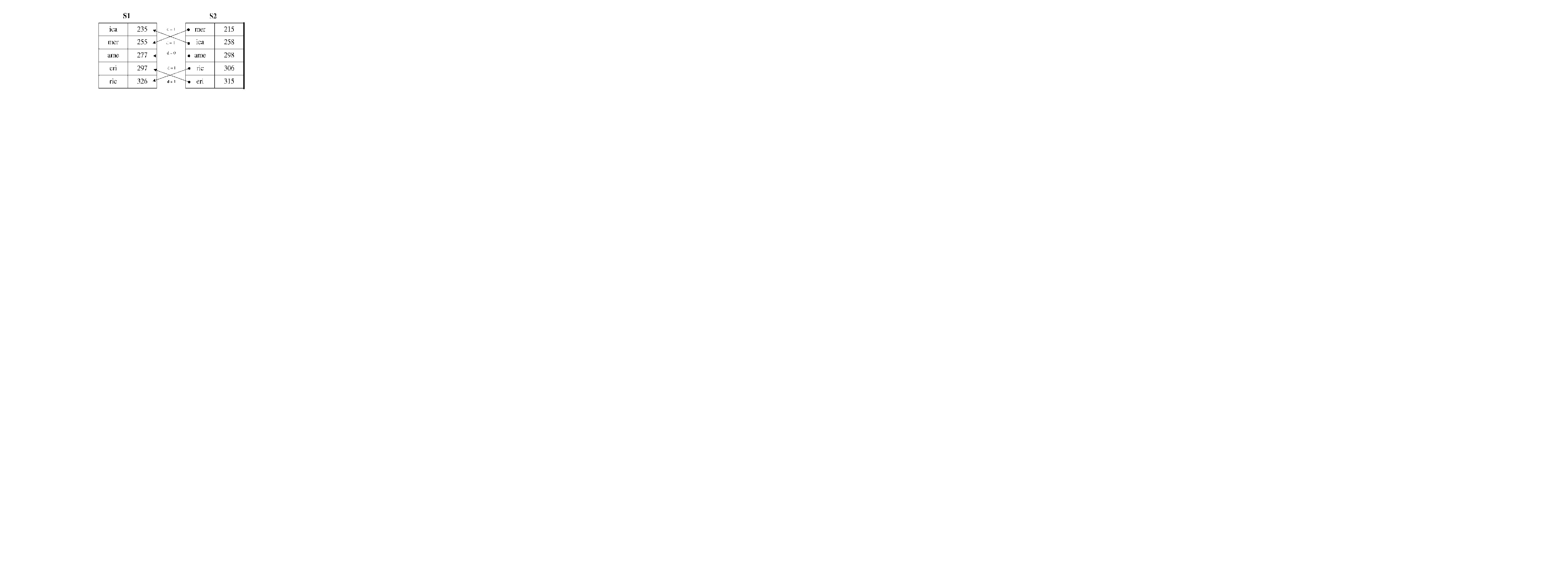
really i have a problem for measure the distance between these data as the following.could i can make it in vhdl from enter this data to vhdl to measure distance between them.
d(s1,s2)=(1+1+0+1+1)/(n^2/2)=4/12=0.3333351 Replies
 Altera_Forum
do you really calculate square root in HDL?
I recommend you to use NiosII CPU ( or other CPU ) and get result in software ( like C-language ). but, you insist to get result in HDL. there is IP-core such as ALTFP_SQRT ( and other floating-point functions ). both way are tough for newbie. let study.- Altera_Forum
hi akira
thanks for reply first i want to know how to create table using vhdl,then calculate the distance between the position of each element in s1 and the position of the same element in s2 then find normalized distance - Altera_Forum
by distance you mean d(s1,s2) as per equation given. But what does this equation mean? what is n^2/2 = 12 ?? and what does 1+1+0+1+1 mean
- Altera_Forum
you can create onchip(or external)RAM.
and you can create ram -initializ like following (this is verilog-HDL sorry) //////////////////////////////////////////////////////////////////////////////////////////////// reg [WORD_WIDTH-1:0]pattern_rom[0:2**ADDR_WIDTH]; initial $readmemh( "ROM_HEX_FILE.txt",pattern_rom); reg [WORD_WIDTH-1:0]outbuff; always @ ( posedge csi_clk ) begin outbuff <= pattern_rom[reg_read_addr]; end assign wir_read_data = outbuff; //////////////////////////////////////////////////////////////////////////////////////////////// ROM_HEX_FILE.txt is initial data of pattern_rom. anyway, there is a way you can create table. but I am not sure you really have big enough memory on your FPGA. - Altera_Forum
d(s1,s2) is the distance between the position of each element in s1 and the position of the same element in s2
which is 1+1+0+1+1=4 then divided by (n^2-1)/2 where n is the number of elements in table sorry for not clear at first. i want to make a vhdl code for that so i need help - Altera_Forum--- Quote Start --- d(s1,s2) is the distance between the position of each element in s1 and the position of the same element in s2 which is 1+1+0+1+1=4 then divided by (n^2-1)/2 where n is the number of elements in table sorry for not clear at first. i want to make a vhdl code for that so i need help --- Quote End --- So in the given case you have the given distances as 1+1+0+1+1 (n = 5) so distance = 1+1+0+1+1 = 4 then normalised to 5^2-1/2 i.e. /12 =.333 is n constant 5 always. How do you get the positions of 1,1,0,1,1? are these five inputs? Once you are clear about the requirement then you can go for coding.
- Altera_Forum
first n is not constant it depend on table element which is definitely changed .
second , the position of each element corresponding to the same element in the other table i wrote a code put didn't know ,is it right? give a code for every element in table library IEEE; use IEEE.STD_LOGIC_1164.all; package profile_A is type A1 is array (0 to 4) of std_logic_vector( 23 downto 0); constant table1:A1:= ("011010010110001101100001","011011010110010101110010", "011000010110110101100101","011100100110100101100100","011001010111001001101001"); type A2 is array (0 to 4) of std_logic_vector( 23 downto 0); constant table2:A2:= ("011011010110010101110010","011010010110001101100001", "011000010110110101100101","011001010111001001101001","011100100110100101100100"); end profile_A; ---------------------------------------------------------------------------- library IEEE; use IEEE.STD_LOGIC_1164.ALL; use IEEE.STD_LOGIC_ARITH.ALL; use IEEE.STD_LOGIC_UNSIGNED.ALL; use work.profile_A.all; entity samples is port ( s1:in A1; s2: in A2; clk:in bit; distance:out integer); end samples; architecture Behavioral of samples is signal d :integer ; begin process(clk,s1,s2) begin for idx in 0 to s1'length loop if (clk='1'or clk'event) then if s1(idx)=s2(idx)then d <= idx-1; end if; end if; end loop; end process; end Behavioral; - Altera_Forum
Judging from your code you assume S1/S2 are inputs each 24 bits. However I doubt it.
More likely you enter (n) elements each 24 bits wide into two rom tables (e.g. from a file). Once you have these two roms then you read rom1 output and check each output against rom2 output until you find a match then the distance is address2 - address1 then you perform your computation circuitry of adding all results * (n^2-1)/2 The divide by 2 is easiest(just discard 1 LSB from final result). for n^2-1 use multiplier subtractor directly(multiply n * n) then subtract 1 for final division you will need a divider - Altera_Forum
thanks kaz , y really helped me
first i tried to make vhdl code for dual port ram because i will compare between two samples ..is it right thing??? but i have a problem when i tray to test the test bench is (all generics must take a default value) here is code i need your help... library ieee; use ieee.std_logic_1164.all; use ieee.std_logic_unsigned.all; entity bram_tdp is generic ( DATA : std_logic_vector (0 to 6) ; ADDR : std_logic_vector (0 to 6)); port ( -- Port A a_clk : in std_logic; a_wr : in std_logic; a_addr : in std_logic_vector(6 downto 0); a_din : in std_logic_vector(6 downto 0); a_dout : out std_logic_vector(6 downto 0); -- Port B b_clk : in std_logic; b_wr : in std_logic; b_addr : in std_logic_vector(6 downto 0); b_din : in std_logic_vector(6 downto 0); b_dout : out std_logic_vector(6 downto 0) ); end bram_tdp; architecture rtl of bram_tdp is -- Shared memory type mem_type is array ( 6 downto 0 ) of std_logic_vector(6 downto 0); shared variable mem : mem_type; begin -- Port A process(a_clk) begin if(a_clk'event and a_clk='1') then if(a_wr='1') then mem(conv_integer(a_addr)) := a_din; end if; a_dout <= mem(conv_integer(a_addr)); end if; end process; -- Port B process(b_clk) begin if(b_clk'event and b_clk='1') then if(b_wr='1') then mem(conv_integer(b_addr)) := b_din; end if; b_dout <= mem(conv_integer(b_addr)); end if; end process; end rtl; - Altera_Forum
sorry ,,, i found it
i should change DATA : std_logic_vector (0 to 6) ; ADDR : std_logic_vector (0 to 6)) to DATA : integer :=7 ; ADDR : integer :=7; but i ask you if i can enter data as in the table i mean word (asd,sdf,rto....etc) and is it right to use dual port ram thanks a lot