Forum Discussion

 New Contributor
10M08SCE144C8G Temperature Issues
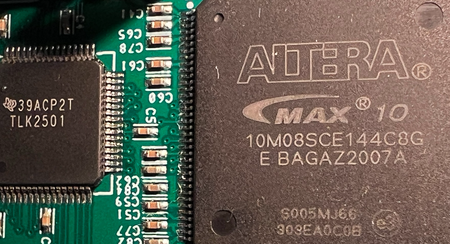
 New Contributor
Thanks for this input Matt.
1. We will investigate this Errata carfully.
2. Yes, same binary was used. The .pof compile date is 2016-06-07. We will look into re-compiling the project.
3. Sorry. The FPGA does not work at all at 20-25C room temperature. But this only appy to about 1/3 of the 2301 dated FPGA units.
We don't think the FPGA parts are fake, but we can't know 100% for sure they are not re-purposed/used parts.
The firmware for these FPGA's was originally designed by an external consultant (as we lack in-house FPGA expertice).
Sadly, this consultant is no longer available so we are now in contact with some other consultants to solve this.
 New Contributor
1. For the Errata - I removed suggestion from previous post since I wrongly decoded the 2007 date code. It is never a bad thing to double check the issues from errata, though.
2. For the binary I would suggest to try recompile the project since it is possible for adjustments in silicon production to affect timings of the FPGA and thus lead to some issues, for instance. Synthesiser should be able to fix this if it is indeed the case.
3. Do you test the boards through all the product temperature range? For 33% not working could be some margin effects like capacitance change with temperature and not related to the FPGA at all.
Still don't understand what do you mean by "FPGA does not work at all at 20-25C room temperature".
For me it appears as if what you really mean by this is "FPGA doesn't fulfil the function that it is supposed to". But it doesn't mean that it does not work at all - the FPGA itself might be configured (let's call it "firmware running"), PLL generating clocks, input data handling but it could be at some dead end of the algorithm due to wrong timings, for instance.
BR, Matt.
- 2reSolve2 years ago
1. OK
2. We will hire an external FPGA consultant which will recompile the project and perform the necessary simulation and design verification and testing at different temperatures.
3. No, unfortunetly we currently do not. So, as per now, we only know that 33% of these boards fails their function test at 20-25C room temperature. If we were to lower the temperature below room temperature, we would expect an even higher persentage. We Will look into the capacitor issue.
Sorry about the unclear langue. And yes, I really mean "The FPGA doesn't fulfil its function at room temperature (and below)".
 FvM2 years ago
Super Contributor
Hi,
seeing the problem with several boards suggests a systematic effect, e.g. a design timing failure. The reason why it reveals with newer chips can be that they are faster due to technology improvements. Raising temperature reduces chip speed.
First steps would be to characterize observed function failure in detail and to have an expert reviewing the original design for possible timing constraint vacancies and other trap doors.- 2reSolve2 years ago
Yes, your assumtion is probably the correct one.
We have already reached out to an expert which will review the original design and simulate its timing constraints. - FvM2 years agoForgot to mention that there can be also board hardware related issues, power supply voltage out of range or illegal logic level of relevant input signals so that the design is only working by chance.


