Forum Discussion

 New Contributor
MAX10 correct VCCIO when using LVDS
Hello Intel Community,
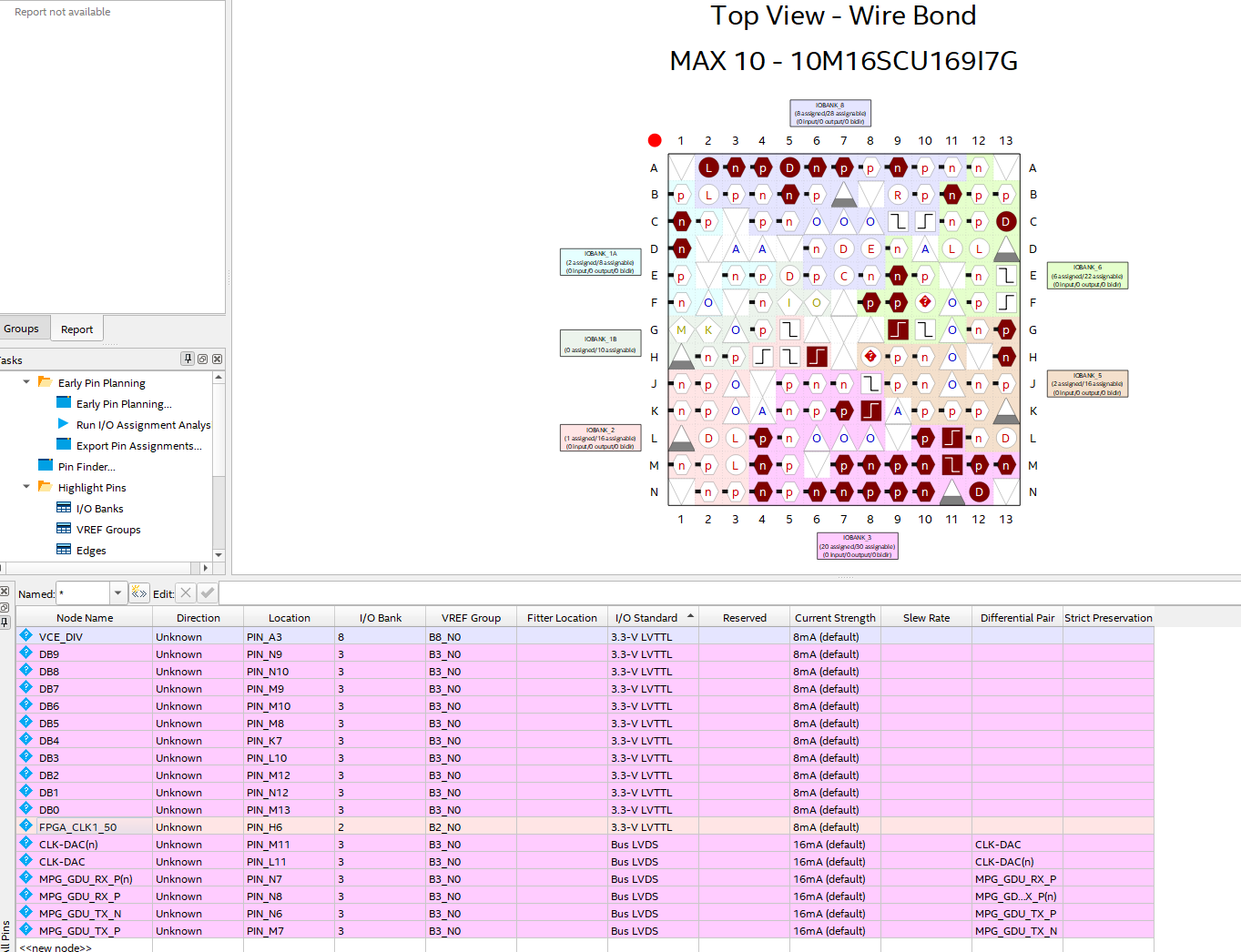
Can we use 3.3V VCCIO supply voltage on bank 3, where IOs are configured as differential bus - LVDS ?
Quartus pin configurator is not complaining about this situation, device is 10M16SCU169I7G.
Thank you for your replies,
Best Regards,
Michal
7 Replies
 AqidAyman_Altera
Regular Contributor
I hope the previous response was sufficient to help you proceed. As we do not receive any response from you on the previous reply have been provided, please login to ‘https://supporttickets.intel.com’, view details of the desire request, and post a feed/response within the next 15 days to allow me to continue to support you by replying to this thread.
- AqidAyman_Altera
Hi,
I wish to check on this issue.
Do you need more clarification from this issue?
If yes, please let us know so that we can support you more.
Regards,
Aqid
 Farabi_Altera
Hello,
Yes correct, you need to follow all the requirements as published in the device datasheet. Otherwise, the functionality, performance and reliability is not guaranteed to work as expected.
regards,
Farabi
 Michal_S
Thank you, HW change is necessary.
- Michal_S
Hello FvM,
thank you very much for your reply, do you know if there is a risk of hardware failure? or is somewhere, in Intel documentation, internal structure of LVDS pins defined? I am really struggling to find it. Might be interesting to know what is behind reduced performance.
From what we see, as we have VCCIO powered by 3.3V (unfortunately), the mid point of a LVDS bus is around 1.6V, so there seems to be ratiometric circuit depended on VCCIO -> by using 2.5V it will be 1.2V, as should be according to LVDS specification.
Thank you
Have a nice day
Michal
 FvM
FvMSuper Contributor
The keyword in my previous post is "unsupported". Therefore you can't expect specifications about performance etc. You need to evaluate operation parameters on your own. Common mode output voltage, also differential voltage will be increased with 3.3 V supplied FPGA LVDS driver, most reveivers tolerate it.
- FvM
Hi,
guess you did not try to compile your design.
Error (169026): Pin xx with I/O standard assignment Bus LVDS is incompatible with I/O bank 3. I/O standard Bus LVDS, has a VCCIO requirement of 2.5V, which incompatible with the I/O bank's VCCIO setting or with other output or bidirectional pins in the I/O bank using a VCCIO requirement of 3.3V. Assign output and bidirectional pins with different VCCIO requirements to different I/O banks, or change the I/O standard assignment for the specified pin to a compatible I/O standard.LVDS IO-standards can be only implemented in 2.5 V bank. If you already finished your PCB, you may try an unsupported workaround, use only 2.5 V IO standards in bank 3, although it's actually supplied by 3.3 V. LVDS performance will be reduced, you should also avoid to set higher IO-strength than supported for 3.3V to any pin in the bank.