Forum Discussion

 Contributor
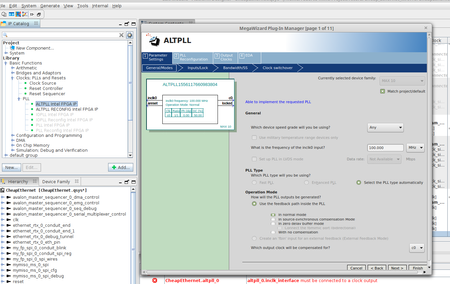
Linux Qsys Now "platform designer", ALT_PLL Altera FPGA IP doesn't save, crash.

 New Contributor
@Serqetry, last year when I posted the above, I was working on the University of Colorado Boulder's FPGA specialization on Coursera. A couple things I learned. Ultimately, Altera (now Intel) do not do a good job of supporting Linux. They just don't. Other tools within the Intel tool chain became maddeningly difficult to get work (if ever) under Linux. Don't even getting me started on Nios. In the end, I spent days of time trying to get Linux to work. Honestly, I switched to Windows. And, Windows just worked. If you have the option to switch to a Windows PC with Intel tools, I would. If you don't, you're going to face an uphill battle as this is will likely be the first of many challenges. I know this doesn't answer your question. But, I wouldn't wish my journey last year (before I switched to Windows) on my worst enemy. Sorry.
 New Contributor
Thanks for the reply! I'm taking the same Coursera courses now, so that's one reason I ran into the exact same problem as you. I know what you mean, Linux usually gets way less attention than Windows, but honestly I'm super grateful Quartus Prime and the other tools are supported on Linux because I'd rather quit computers and electronics and take up botany than daily drive Windows. I do keep a Windows VM around for the situations where something just won't work otherwise... but honestly my biggest complaint with the Coursera stuff is that classes are so horribly out of date. Quartus Prime 16?... why do they not update these courses? I'm amazed I've been able to get this far with the newer versions of Quartus, There's definitely been some ancient crusty file compatibility issues but that's Coursera's fault. You may be right and I'll run into even more trouble in the later courses, so I'll keep that VM on standby and try to not struggle too much. Thanks for the heads up.

