Forum Discussion

 New Contributor
Opposite logic of work

 Super Contributor
Not sure why you are using weak pull-ups on inputs. They're usually used on outputs so it's possible that assignment has no effect but...
Also remember that LEDs are usually active low. So leds 1 and 4 being on is not surprising.
 New Contributor
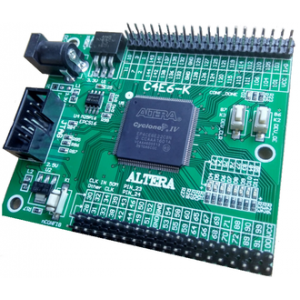
Thanks for your answer. I applied resistors on the input so that the inputs to which the buttons are connected do not float in the air in an indeterminate state when the buttons are in the default unpressed state. So it says in many training materials with example projects based on ready-made training FPGA boards, you probably missed or forgot this material?
According to this example, the buttons are in an unpressed state at startup. One end of buttons are grounded, second commutate to input of FPGA. But at the same time, the FPGA inputs to which these buttons are switched, are in logical "1" due to weak pull-up resistors, and the logic of the circuit must proceed from the this starting operating conditions, when there are clear logical "1" on both FPGA inputs. I see a completely different logic of work, that's why I asked the question.


