User Profile

RichardT_altera
 Super Contributor
Joined 7 years ago


User Widgets
Contributions
Re: How to organize a shared cache for qsys systems?
I would suggest Not to treat a parent .qsys as self-contained through IP_FILE. For nested Platform Designer systems, use a directory that preserves the original relative structure, and configure that directory through IP_SEARCH_PATHS or .ipx files. The parent .qsys stores child-system and component metadata, including path information. IP_FILE registers a specific .ip instance with Quartus, but it is not a universal override for resolving every child referenced inside a .qsys. In short, use IP_FILE for project-level .ip instances, and use the project IP search path or .ipx files to discover _hw.tcl defined components. Preserve the nested .qsys dependency structure separately. 2.6.5.2. Defining the IP Search Path with Index Files https://docs.altera.com/r/docs/683609/26.1/quartus-prime-pro-edition-user-guide-platform-designer/ip-component-description-files The Quartus® Prime software identifies parameterizable IP components in the IP search path for the following files: Component Description File (_hw.tcl)—defines a single IP core. IP Index File (.ipx)—each .ipx file indexes a collection of available IP cores. This file specifies the relative path of directories to search for IP cores. In general, .ipx files facilitate faster searches.18Views0likes0CommentsRe: Questa warning vsim-3473 Component instance is not bound.
Hi sselhorst I have provided a batch file and .do file through private message that allow you to run the simulation directly in Questa, without needing to launch the flow through Quartus. Please give it a try and let me know if you encounter any issues. If you have any further questions or need additional assistance, please feel free to reach out to me. Thank you. Regards, Richard Tan15Views0likes0CommentsRe: Questa warning vsim-3473 Component instance is not bound.
Hi sselhorst Have you tried the automating simulation with the run simulation feature? The official user guide is available here: https://docs.altera.com/r/docs/730191/25.3/questa-edition-simulation-user-guide/automating-simulation-with-the-run-simulation-feature This flow will automatically: -Generate the required simulation setup files -Compile the Altera IP simulation models -Compile the design files -Launch Questa If the issue still persists, could you please share the design .qar file (Project → Archive Project) so that we can investigate further? Regards, Richard Tan74Views0likes3CommentsRe: New Computer can NOT generate free license
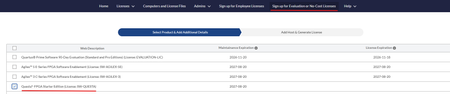
I received your private message. The Questa FPGA Starter Edition license is a no-cost license, so there is no need to rehost your existing license. You can generate a new license by following these steps: 1. Go to Sign Up for Evaluation or No-Cost Licenses on the Altera SSLC portal. 2. Select Questa FPGA Starter Edition from the list of available no-cost licenses. 3. Enter the Host ID (NIC ID) of the machine where you intend to use the license. If you encounter any issues during license generation, please let me know and share screenshots of the steps where the process fails. Regards, Richard Tan91Views1like0CommentsRe: Problem in running Questa with Testbench
As a starting point, I recommend following the steps and example design provided in the user guide to familiarize yourself with the simulation flow: https://docs.altera.com/r/docs/703090/21.1/questa-intel-fpga-edition-quick-start-intel-quartus-prime-standard-edition/questa-intel-fpga-edition-simulation-quick-start-intel-quartus-prime-standard-edition?contentId=Ji3cTMv3yN78urty1lwAVw Once you have the example design running successfully, try applying the same flow to your own project. This will help verify that the simulation environment is set up correctly and make it easier to identify any project-specific issues. Regards, Richard Tan39Views0likes5CommentsKnow-How: Licensing Guide
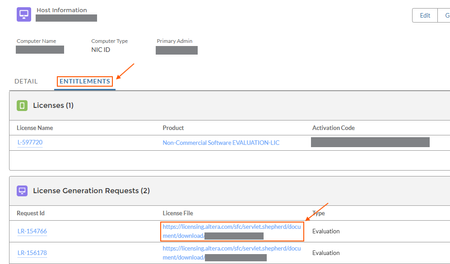
#sharing #debug #altera #alldevices #license Disclaimer: This article is provided as-is for educational purposes only, without warranty of any kind. Use the information at your own risk. Always verify implementations in your specific environment and consult official Altera documentation for production deployments. Introduction Licensing issues are one of the most common reasons FPGA tools fail to start. The good news is that most problems are configuration related and can be fixed quickly by following a simple, step-by-step approach. Sections 1: Start with the Error Message (Most Important!) Always look at the first licensing error message shown by the tool. This is usually the real issue. Any errors that appear later are usually caused by the first problem. Here’s are common error messages and what they usually mean: Invalid hostid → License does not match your machine ID Cannot find license file → Invalid or missing license path Unable to checkout a license → License not found, in use, or server issue 300: License version is outside the range of the contract → license file generated with blank FLEXlm error: Vendor daemon version is too old → daemon used mismatch or too old Cannot checkout uncounted license in Windows Terminal Services → Questa does not support remote desktop. Most common errors already have known fixes. Try searching the error message or key issue at: Altera Knowledge Base: https://community.altera.com/category/top/kb/knowledge-base Altera Community Forums: https://community.altera.com/category/forums For floating licenses, you can also check the FlexNet error code list: Error Code Descriptions Don’t try to fix everything at once. Fix the first error, then retry. In many cases, the rest will disappear automatically. 2: Check Your License (.dat) File Open the .dat license file using a text editor (for example, Notepad) and verify the following. i. Machine ID (NIC / HOST ID) The license is locked to a specific machine ID. Example in the license file: # Primary Machine ID-NIC ID 12AB34C56EF7 If the Host ID doesn’t match your machine ID, the license will not work. Helpful Tips 1: ----------------------------------------------------- START ----------------------------------------------------- Quartus software can automatically detect the Machine ID. To view this, go to Tools → License Setup, then check Local System Information and select one of the detected NIC IDs. ------------------------------------------------------ END ------------------------------------------------------ ii. License Type Licenses are set up differently, so confirm which type you have.Look for one of these lines: # Fixed Node License → Nodelocked license # Floating Server License → Floating license Nodelocked: Locked to one machine Floating: Served from a license server and shared Make sure you’re following the setup steps that match your license type. iii. Product License Summary Find the Product License Summary section and confirm it lists the tools/IP you’re planning to use. Examples: Quartus® Prime Software (Standard / Pro) Questa® FPGA Starter Edition (SWQUESTA) If a tool or IP is not listed here, it won’t be able to check out a license—even if the license file setup successfully. iv. License Expiration & Maintenance Licenses can look similar but behave very differently. We have: a. Perpetual License Has a Maintenance Expiration date You can use tool versions released before that date Example shown in license file: # Maintenance Expiration of 2026.06 # No license expiration date b. NonPerpetualLicense Has a hard expiration date License stops working after this date Example shown in license file: # License Expires 20Jun2026 Always doublecheck the license expiration & maintenance date before moving on. 3. Verify Environment Variables The tools use environment variables to find the license. If these are wrong, the tools may not find your license—or may use an old license file. Common environment variables: Different tools use different environment variables to locate the license. LM_LICENSE_FILE → Quartus® Prime SALT_LICENSE_SERVER → Questa* FPGA Edition Depending on the license type, they should point to: Nodelocked license: Full path to the .dat file Floating license: port@hostname Examples: LM_LICENSE_FILE=C:\licenses\license.dat LM_LICENSE_FILE=25000@licenseserver Next verify the environment variable. Open Command Prompt and run: echo %LM_LICENSE_FILE% If nothing is printed, the environment variable is either not set or the changes have not taken effect. If it is the latter, close and reopen the command prompt after making the changes. If the variable points to an incorrect location, update it accordingly. Note that outdated or incorrect environment variables are a very common source of issues. Helpful Tips 2: ----------------------------------------------------- START ----------------------------------------------------- There is a quick way to set using command line. Open Command Prompt and run: Windows: setx LM_LICENSE_FILE <path_to_license_file> Linux: setenv LM_LICENSE_FILE "<path_to_license_file>" ------------------------------------------------------ END ------------------------------------------------------ 4. Check the License Server (Floating Licenses Only) If you’re using a floating license, verify the server. On the client machine: Server hostname resolves correctly Network is working Firewall is not blocking the license port On the license server: License server process is running Vendor daemon is running Server log shows no fatal errors Licenses are available (not all checked out) If the server isn’t running properly, clients won’t be able to get licenses. 5. Scenario / Walkthrough i) Floating License Setup Walkthrough A floating license setup walkthrough (Know-How: Set Up a Floating License) is available to guide you through the complete process of configuring a floating license. Know-How: Set Up a Floating License (Step-by‑Step Walkthrough) | Altera Community - 352000 ii) Manual License File Download (License Email Not Received) If you generate a license but do not receive the license email within 5 minutes, you can manually download the license file using the steps below: Log in to SSLC. Navigate to Computers and License Files. Click the Primary Computer ID. Go to the ENTITLEMENTS tab. Select the relevant license (for example, LR‑****). Click the license file link to download the license file. Example shown below: iii) SSLC Access Denied Error Resolution If you encounter the message below when attempting to sign in to SSLC, please refer to the community thread linked below for the solution: Message:“You do not currently have access to this site. Please follow the instructions on the help page to request access.” Self service license server doesn't work | Altera Community - 352404 iv) Changing License Type (Fixed ↔ Floating) To change an existing license type: Log in to SSLC. Navigate to Computers and License Files. Navigate to the license file and click Edit in the drop-down menu. Change the License Type to FIXED or FLOAT, click Save. Now you can generate the license file with the Existing Computer. For your reference, this error occurs when you attempt to create a computer with the same NIC ID. You cannot create two computers with the same NIC ID, even with different license types. *Additionally, changing the license type will use up one rehost count. If all 3 rehost count have been used up, you can not change the license type for the specific computer anymore. Conclusion Licensing issues are almost always setup or configuration problems. Following this guide step-by-step starting with the error message will resolve most issues. If you’re still stuck after trying all the steps, feel free to post your issue on the Altera Community Forum (https://community.altera.com/category/forums) for help. When posting, please try to include the following: i. Error Details The exact licensing error message, copied as is If there are multiple errors, include the first one shown ii. Tool Information Product name (example: Quartus/Questa) Tool version (example: Quartus Pro 25.3/ Questa Altera FPGA Edition 2025.2) Operating system (Windows or Linux, version if known) iii. License Information License type: Nodelocked (fixed)/ Floating (network) Purchased / Evaluation license If possible, a copy of the license file (.dat) iv. What You’ve Already Tried Steps you have already checked or attempted Any workaround that partially worked The more complete your post, the faster the community (and Altera support staff) can help. Additional Altera Support Webpages For further information related to licensing, you may check out Altera Licensing Webpages for the wholesome experiences to get your FPGA licensing product setup and running with minimal hassle: FPGA Licensing Support Center Quartus® Prime Software Licensing Questions and Answers Additionally, we have FPGA Software Download and Installation Support webpage: FPGA Software Download and Installation Support Self Service Licensing Center (SSLC) Issues For issue related to the SSLC, please contact Customer Service if you encounter any of the following: Can’t find a product in SSLC Errors when generating a license file Errors when renewing a license file Unable to generate a companion or temporary license Unable to update license users or delegate administrators Need to transfer license ownership between accounts Contact Altera Customer Service here: https://licensing.altera.com/sslc/s/contact-customer-service For account login issue, please mail to: [email protected] License Purchase Inquiries For purchasing licenses, pricing questions, or commercial inquiries, please contact an Altera Authorized Distributor: https://www.altera.com/contact811Views0likes0CommentsRe: Starting Quartus GUI fails in docker version
I think the Quartus Docker image is primarily intended for command-line execution. The documentation and examples appear to focus mainly on CLI-based flows, so there is a good chance that GUI operation is not officially supported. Reference: https://hub.docker.com/r/alterafpga/quartuspro-v25.1.1 Regards, Richard Tan26Views0likes0Comments