Altera_Forum Honored Contributor
Honored ContributorHonored Contributor Honored Contributor
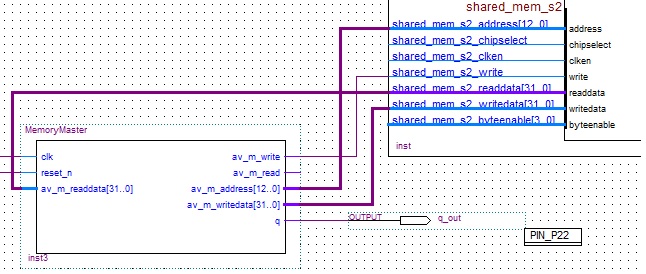
The new code shown will write the value 0x0000000C to address 0 continuously.
In the code:else
q <= '0';
--if ( av_m_read_n = '0' and av_m_address = b"0" ) then
--av_m_readdata <= reg_temp;
--elsif ( av_m_write = '0' and av_m_address = b"1" ) then
av_m_write <= '1';
av_m_chipselect <= '1';
av_m_byteenable <= "1111";
av_m_address <= b"0_0000_0000_0000";
av_m_writedata <= X"0000000C";
av_m_address <= b"0_0000_0000_0001";
av_m_writedata <= X"0000000C";
av_m_address <= b"0_0000_0000_0010";
av_m_writedata <= X"0000000C";
av_m_address <= b"0_0000_0001_0000";
av_m_writedata <= X"0000000C";
av_m_address <= b"1_1111_1111_1111";
av_m_writedata <= X"0000000C";
--av_m_address <= b"0_0000_0000_0011";
--av_m_writedata <= X"0000000C";
av_m_write <= '0';
av_m_chipselect <= '0';
av_m_byteenable <= (others => '0');
end if; av_m_address <= b"0_0000_0000_0000";
av_m_address <= b"0_0000_0000_0001";
av_m_address <= b"0_0000_0000_0010";
av_m_address <= b"0_0000_0001_0000";
av_m_address <= b"1_1111_1111_1111";